How to Choose a Packing Machine: 6 Questions to Answer First
Pick a packing machine by answering six questions in this order: what your product is (powder, granule, liquid, solid), what package it goes into (roll-film bag, premade pouch, jar), the fill weight, the speed you need, what else the line must do (weigh, inspect, palletize) and your site conditions (power, air, space). The first two decide the machine family; the next two decide the size.
Is your product a powder, granule, liquid or solid?
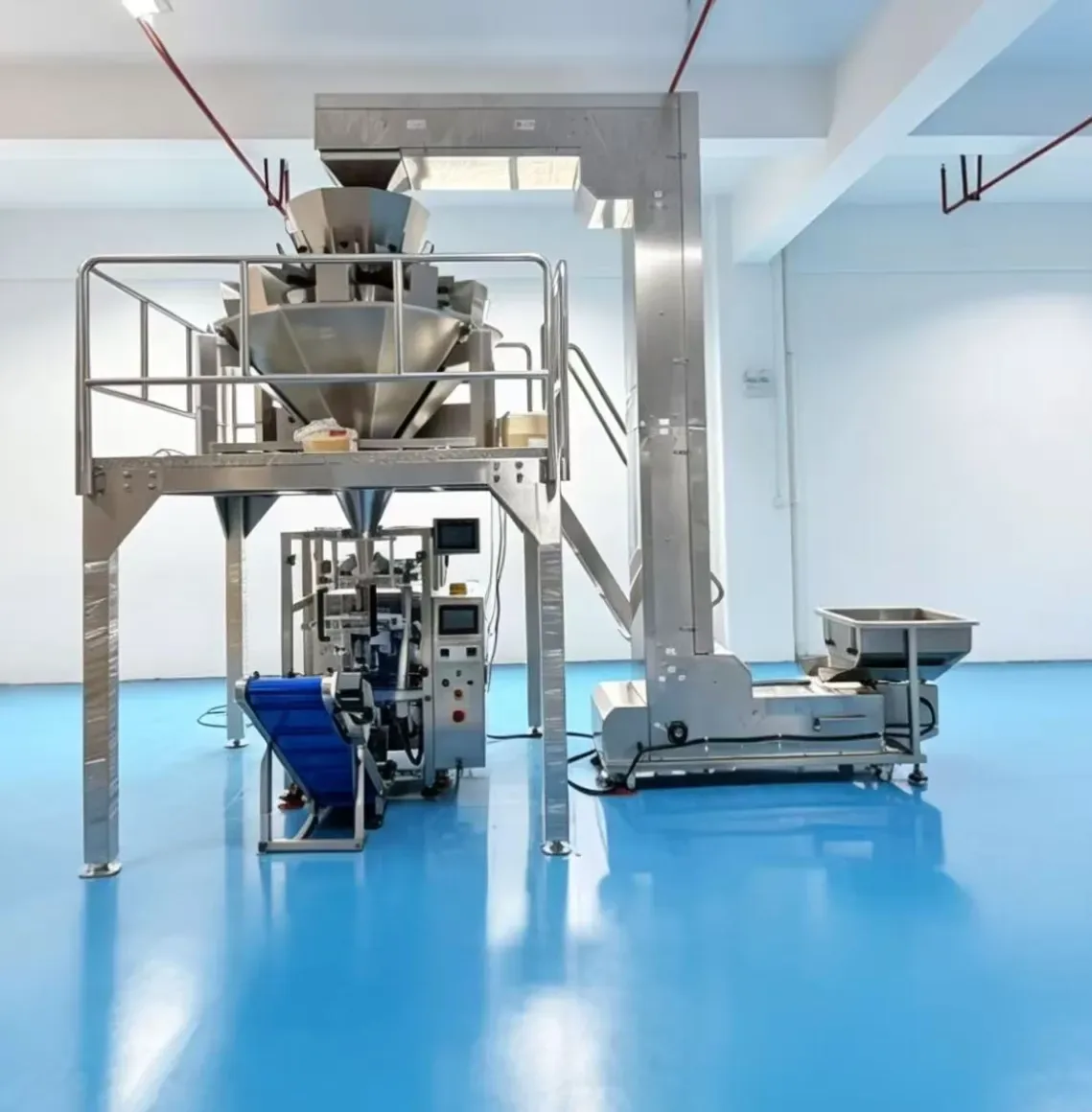
The product form decides the dosing unit, which matters more than the bagger. Powders that do not flow freely (milk powder, flour, spice, coffee) need an auger filler. Free-flowing granules of stable density (rice, sugar, salt, seeds) can use cheaper volumetric cups. Irregular or light granules (chips, nuts, candy, frozen food) need a multihead weigher. Liquids and pastes need a piston, rotor or paste pump. Solid, regular items (biscuits, bread, hardware) are flow-wrapped rather than filled.
Roll-film bag, premade pouch or jar?
Roll-film bags (pillow, gusset, sachet) are made on a VFFS machine from a film reel: lowest material cost and highest speed, up to 60 bags per minute on our standard frames and 70 on sachet machines. Premade pouches (stand-up, zipper, spout) are bought ready-made and filled on a rotary or horizontal pouch machine: better shelf appearance, higher cost per pack, 10–60 pouches per minute. Jars and cans use a filling line with an auger or pump.
Compare VFFS and premade pouch machines →
What fill weight and bag size?
Fill weight and bag size choose the frame. On our VFFS range the model number is the maximum film width: a 320 frame makes bags up to 150 mm wide, a 420 up to 200 mm, a 520 up to 250 mm, and the 1020 up to 500 mm wide and 800 mm long. Send the bag width and length you want and we size the frame and the former.
How many packs per minute do you really need?
Work back from daily output: packs per day ÷ working minutes ÷ 0.8 (allowing for changeovers and stops). For example 20,000 packs in an 8-hour shift is about 52 packs per minute at 80% efficiency. If the number is near the top of a machine's range, choose the next size up or plan two machines.
What else must the line do?
List every step after the product leaves your process: elevating, weighing, bagging, date coding, nitrogen flushing, check weighing, metal detection, case packing and palletizing. Buying the line from one supplier means it is tested together before shipment and one company answers for it.
What should I send a supplier for an accurate quote?
- Product name and a photo; for powder, whether it flows or cakes
- Fill weight or volume per pack, and the tolerance you need
- Package type and size — a photo of a pack you like helps
- Film or pouch material if you already have it
- Target speed or daily output
- Voltage, phase and frequency at your factory
- Any certification your market requires
- Optional: a product sample, so we can test and send you a video
Frequently asked questions
How long does a standard packing machine take to build?
Standard machines are produced in about 10 days, and in-stock standard models can ship in 7 days. Complete lines with weighers, elevators and robots take longer; we confirm the schedule in the quotation.